Advice
Verti-mowing in Perth: what it is and when to do it
It looks brutal on the day and brilliant a few weeks later. Here's what's actually happening to your lawn, and why timing is everything.
30 September 2026 · 5 min read · Thirsty Lawn Solutions
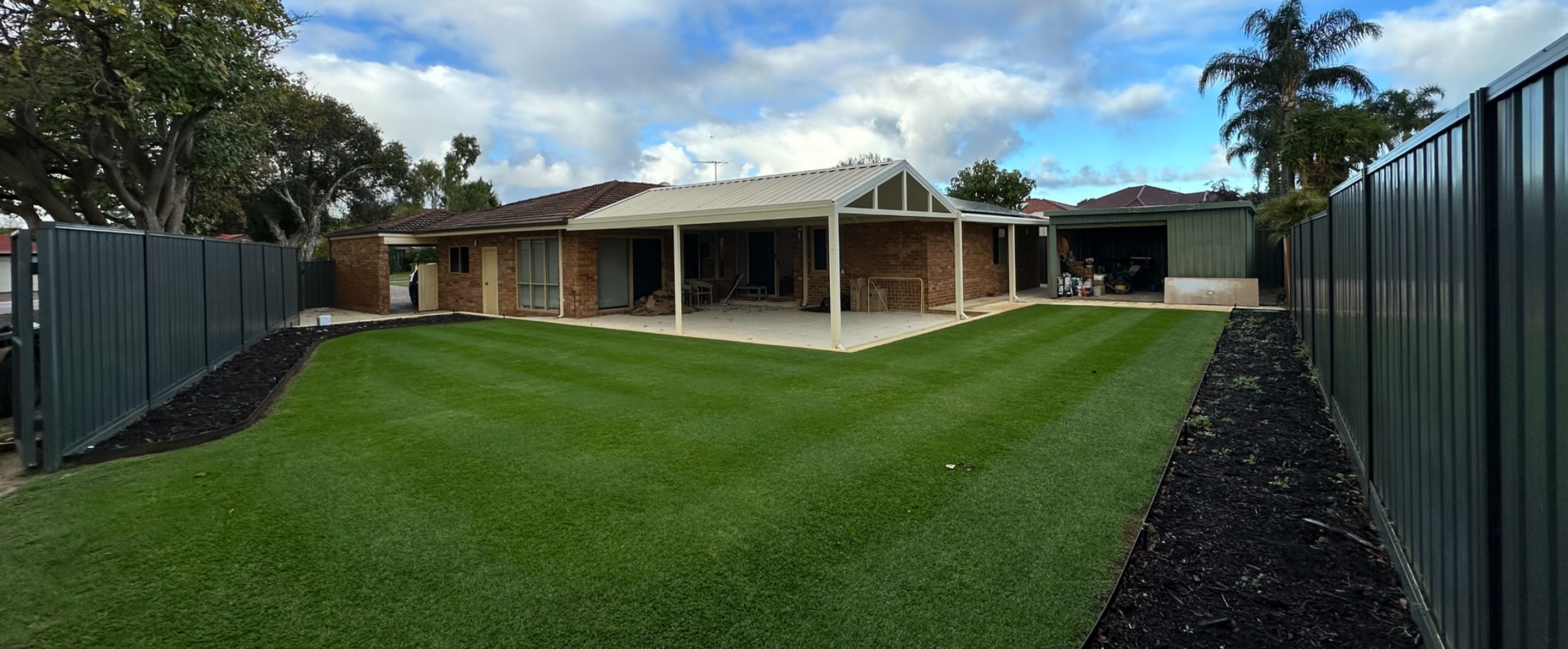
Verti-mowing is one of those jobs that makes neighbours lean over the fence and ask what happened. On the day, the lawn looks like it's been attacked. A few weeks later it's thicker, greener and more even than it was before.
Here's what verti-mowing actually does, how to tell if your lawn needs it, and why the time of year you do it matters more than almost anything else.
What verti-mowing is
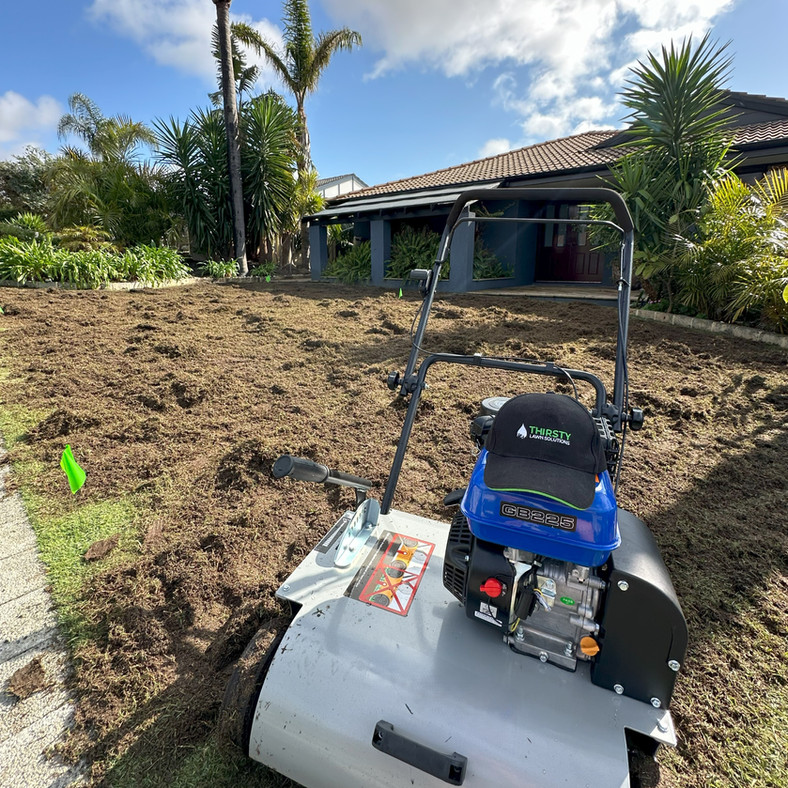
A verti-mower is a machine with a row of vertical blades that spin down into the lawn instead of across the top of it. As it moves, those blades slice down through the grass and pull out the layer of old material sitting underneath.
You'll hear it called a few different things. Verti-mowing, vertimowing, dethatching and scarifying all describe much the same job: getting the thatch out.
Thatch is the build-up of dead runners, stems and old clippings between the green leaf and the soil. A thin layer is normal and does no harm. A thick one turns into a spongy mat that soaks up water and feed before they ever reach the soil, and the lawn starves on top of it.
The blades do one more useful thing. As they cut through the runners, they trigger a flush of new growth from the cut points. That's why a verti-mowed lawn comes back denser than it went in.
Signs your lawn needs it
The lawn will usually tell you. Look for:
- A springy, bouncy feel underfoot, a bit like walking on carpet underlay
- The mower sinking in and scalping, leaving brown patches after every cut
- A brown, matted layer you hit with your finger before you reach any soil
- Water that seems to vanish without the soil underneath ever getting properly wet
- A lawn that's grown upwards rather than thicker, and looks tired no matter what you feed it
If a few of those sound familiar, thatch is a likely culprit. If the ground is hard and water runs off instead, that's more likely compaction, which is a job for core aeration. We've laid out how to tell them apart in scarifying, coring or top dressing.
Which lawns suit it
Couch and kikuyu are the classic candidates. They spread hard by runner, and after a few good seasons there's a serious amount of old material down there. They also bounce back quickly, which makes them ideal for it.
Buffalo can be verti-mowed, but it needs a lighter, more careful approach. It grows differently to couch and kikuyu and doesn't respond well to the same aggressive treatment, which is why it's worth having someone look at a buffalo lawn before deciding how hard to go.
Newly laid turf should be left alone. A lawn that's still establishing its roots needs time to settle before it's ready for anything this heavy. If you've just put in new turf, our first six weeks guide covers what it does need.
When to verti-mow in Perth
Timing is the whole game with this one.
Perth lawns are warm season grasses. They grow strongly when the soil is warm and slow right down in winter. Verti-mowing takes a lot out of a lawn, so it has to be done when the grass can recover fast. That means the growing season, which runs roughly September to March here.
Spring is the sweet spot. The lawn is waking up with a full season of growth ahead of it, and a lawn verti-mowed in spring can be thick and level well before the heat of summer arrives. Later in the season still works, as long as there's enough warm weather left for the lawn to knit back together.
What doesn't work is winter. Verti-mow a dormant lawn and it just sits there thin and open for months, with every gap an invitation for weeds. The same goes for the middle of a heatwave, when the lawn is already under stress.
Renovation slots fill fast once the weather warms. Our post on when to book a lawn renovation explains why early bookings get the best of the season.
What your lawn looks like afterwards
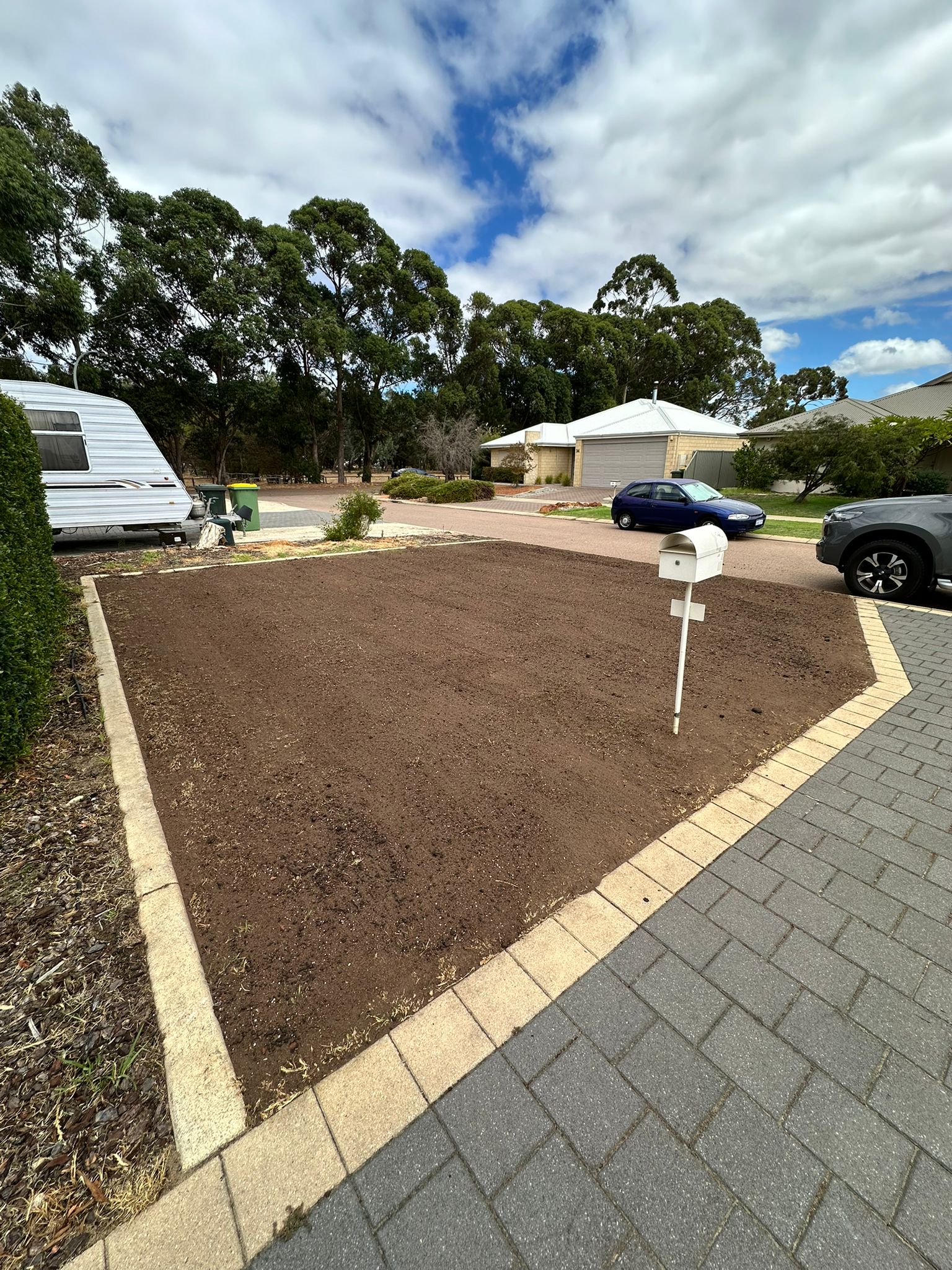
Be ready for it. Straight after verti-mowing, the lawn looks scalped and torn up, and there's usually a surprising pile of old thatch to take away. That's the job working.
Over the following days you'll see green shoots coming through from the cut runners. After a couple of weeks it starts to look like a lawn again. With good conditions, a lawn done during the growing season typically has full cover back in around three to four weeks, depending on the weather and the grass.
Aftercare: what the lawn needs to recover
Verti-mowing opens the lawn right up, which is exactly why it's the best moment to put things back in.
Top dressing is the natural next step. A thin layer of good soil blend fills the gaps, levels the surface and gives the new growth something to root into. On Perth's hungry sand it's one of the best things you can do. See lawn top dressing for how we run it.
Feeding helps the lawn refill quickly. Little and often, slow release where possible, rather than one heavy dose.
Watering needs to be steady and deep enough to reach the roots, on your two rostered days. Our Perth watering days guide covers the roster, and if water beads and runs off, our post on hydrophobic sandy soil explains why and what fixes it.
Most of the time verti-mowing isn't done on its own. It's the first step of a full lawn renovation, followed by coring, top dressing and feeding in the right order so each step makes the next one work harder.
The short version
Verti-mowing cuts out the thatch that stops water and feed reaching your soil, and it kicks off a wave of new growth. Couch and kikuyu love it, buffalo needs a gentler hand, and new turf should be left alone. Do it in the growing season, ideally spring, never in winter. Expect it to look rough for a couple of weeks and much better within a month.
Not sure if thatch is your problem? Tell us about your lawn through the quote form and we'll reply within one business day. The owner is on the tools, so the person who looks at your lawn is the person who does the work.
Want your lawn handled properly?
Get a free, no-obligation quote and we’ll get back to you, usually within one business day.