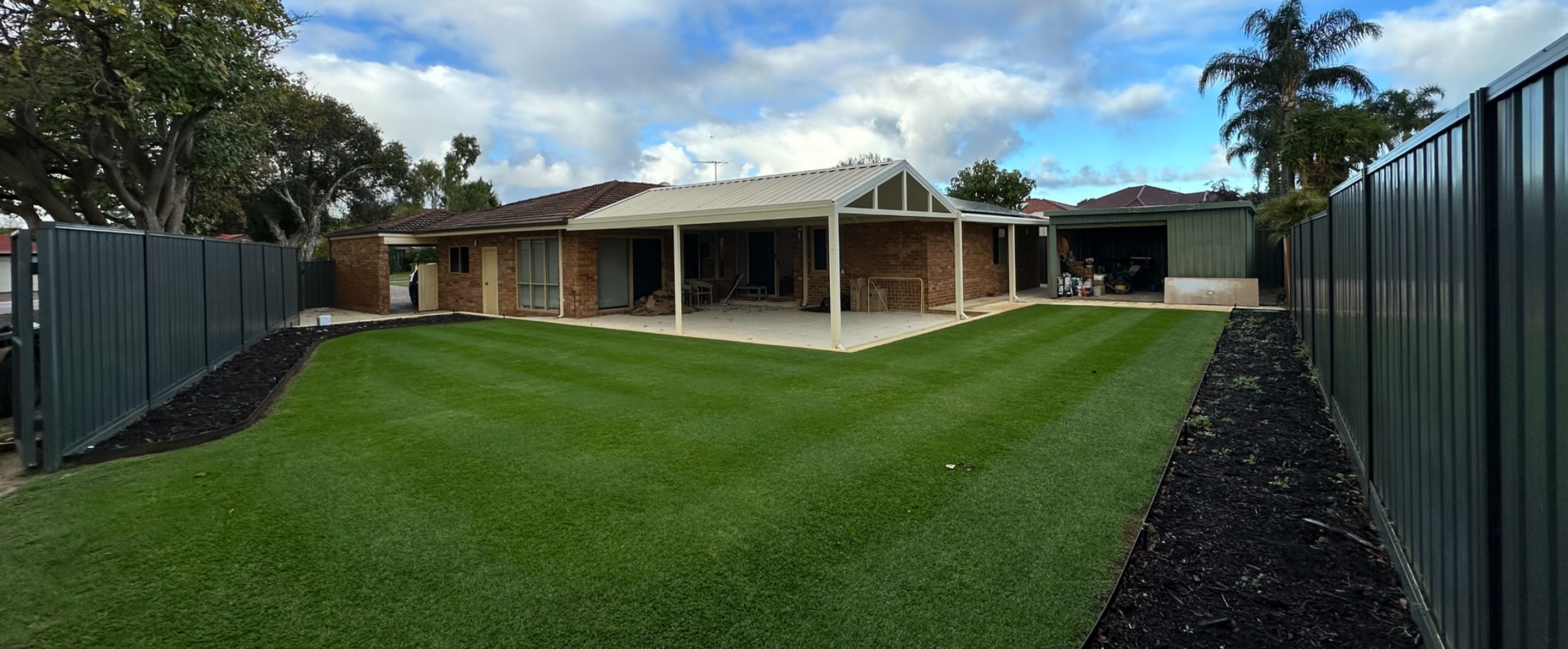
Advice
Mulch vs pebbles vs gravel: which suits your Perth yard?
They all cover bare dirt. That's where the similarity ends. Here's how to pick the one that suits the spot.
30 September 2026 · 5 min read · Thirsty Lawn Solutions
Every Perth yard has ground that isn't lawn. Garden beds, side yards, the strip along the fence, the corner behind the shed. Leave it bare and it turns to dust in summer and weeds the rest of the year.
The usual choice comes down to three things: mulch, pebbles or gravel. They're often talked about as if they're interchangeable. They're not. Each one suits a different kind of spot, and picking the wrong one means either redoing it in a year or living with something that never quite works.
Here's how they compare.
Mulch: for anywhere things grow
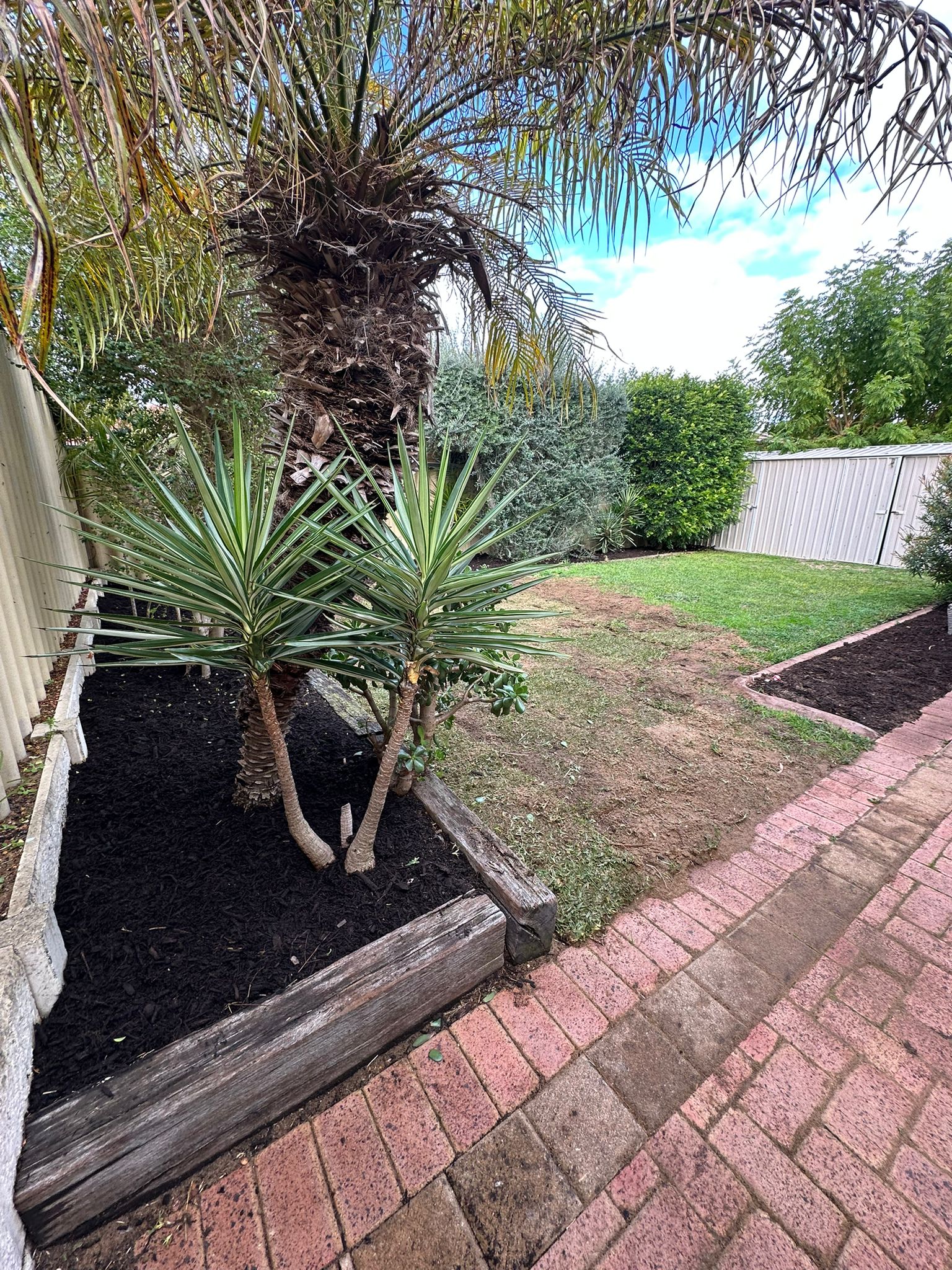
Mulch is the one to use wherever plants are growing. Garden beds, around shrubs and trees, the veggie patch, anywhere roots are working in the soil underneath.
What it does well. Mulch holds water in the soil, keeps the surface cool and keeps weeds down by blocking light. Organic mulch also breaks down over time, feeding organic matter into Perth's hungry sand. Water Corporation says a generous layer of waterwise mulch can save up to 20 percent of the water used in a garden.
Where it falls short. Organic mulch doesn't last forever. It breaks down, so it needs topping up every season or two. It doesn't like foot traffic, and in a windy spot or on a slope, lighter mulch can move around.
Best for: planted garden beds, shrubs and trees, native gardens, veggie patches. Anywhere you want the plants to do well.
We've gone through depth, type and timing in mulching garden beds in Perth.
Pebbles and decorative gravel: for the spots that just need to look good
Decorative pebble and gravel are about finish. They turn awkward, bare ground into something that looks designed, and they do it without needing much from you once they're down.
What they do well. They last. Stone doesn't break down like mulch, so a properly laid gravel area can look good for years. They drain freely through Perth's sandy soil, so they never turn to mud. They don't need mowing, watering or feeding, and they stand up to foot traffic, bins and the odd hose down.
Where they fall short. Stone doesn't feed the soil the way organic mulch does, so it's not the best choice around plants you want to thrive. It can hold heat and reflect it back in exposed spots through a Perth summer, which suits some hardy plants but not most garden beds. It's also harder to change later. Shovelling out mulch is easy. Shovelling out gravel isn't.
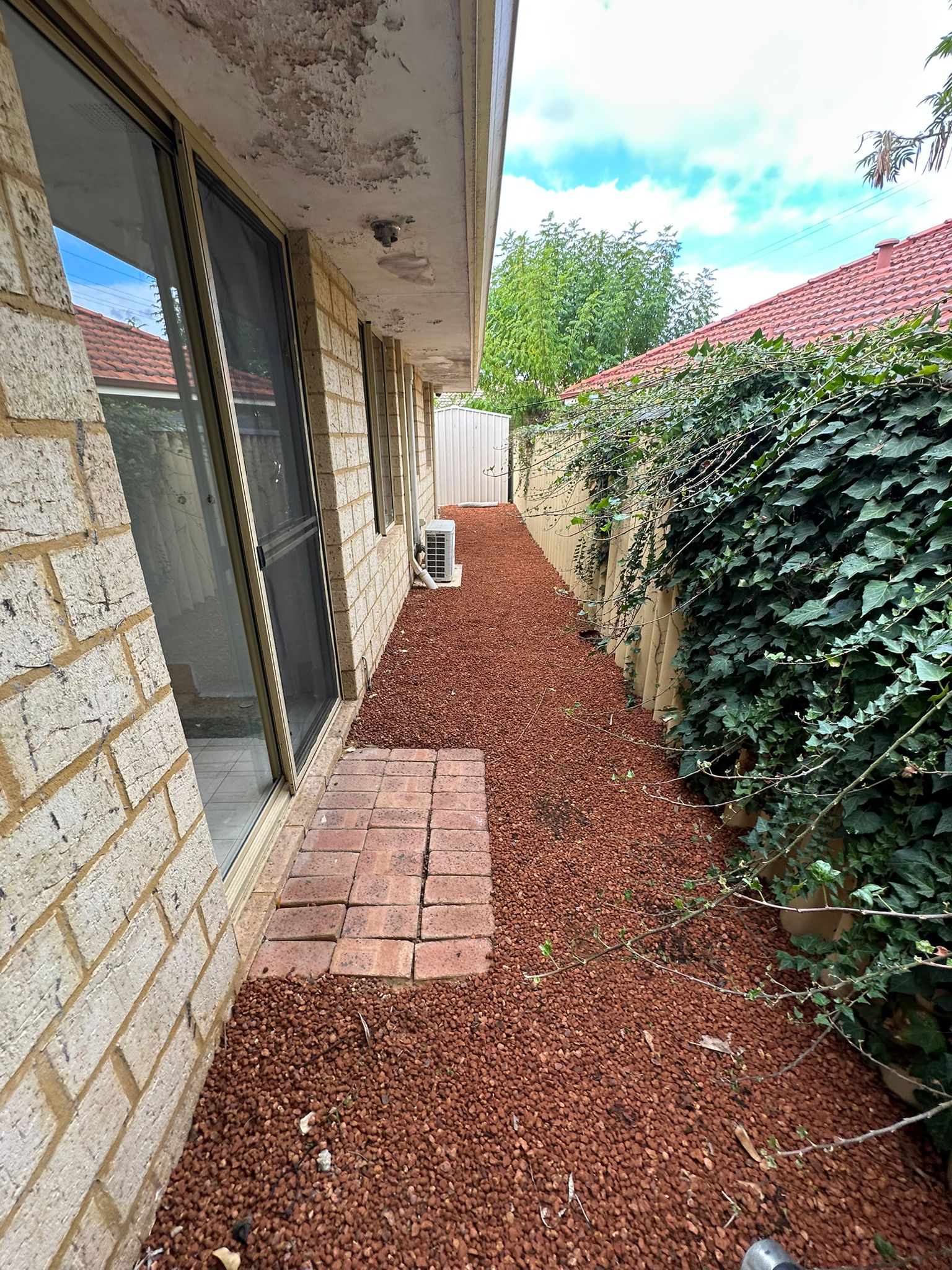
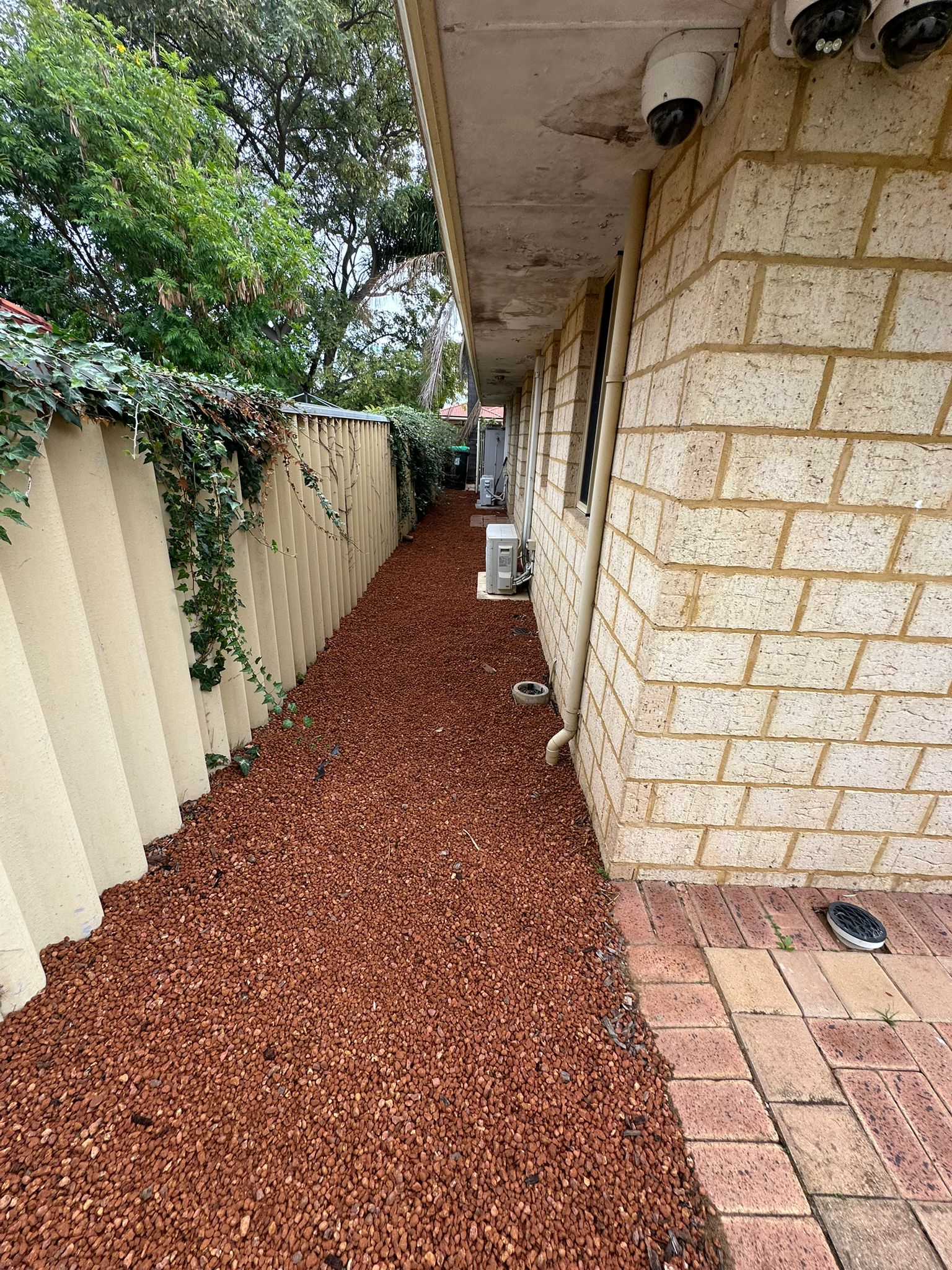
Best for: side yards, paths, dry corners, around sheds and water tanks, and shaded strips where lawn won't grow.
Pebbles or gravel?
People use the two words loosely, and there's plenty of overlap. As a rough guide:
- Pebbles are usually rounder and smoother, and they're often picked for looks. They suit feature areas, borders and anywhere the finish matters most.
- Gravel covers crushed and angular stone. Angular pieces lock together better, so gravel tends to sit firmer underfoot and move around less, which makes it a good pick for paths and areas that get walked on.
Colour and stone size matter as much as the type. The right choice ties in with the house, the paving and the rest of the garden. The wrong one looks like leftover material someone forgot to take away.
The part most people get wrong: what goes underneath
Gravel thrown straight onto bare sand looks fine for a few months. Then weeds start pushing through, the stone sinks into the soil and the whole area starts to look patchy.
The fix is the prep. The ground needs to be cleared and levelled, and a quality weed mat laid down before any stone goes on. That keeps the gravel sitting on top where it belongs and stops weeds getting the light they need to come through. It's the difference between an area that stays clean for years and one you're weeding every spring.
How to choose, spot by spot
Most yards need more than one of these. Here's a quick way to decide.
- Planted garden bed? Mulch.
- Around trees and shrubs you want to grow? Mulch.
- Veggie patch? Fine mulch like pea straw.
- Narrow side yard or path? Gravel, ideally with a paver path through the middle.
- Shaded strip where the lawn keeps failing? Gravel or a mulched bed, depending on whether you want plants there.
- Dry corner that doesn't need to grow anything? Pebble or gravel.
- Feature area near the house or entertaining space? Decorative pebble, picked to suit the house.
If the spot you're thinking about is a lawn patch that won't grow under trees, our post on why your lawn is thinning under the trees covers what to try before you give up on grass there.
Tie it together with edging
Whatever you choose, clean edges are what make it look finished. A firm border keeps mulch in the beds, keeps gravel off the lawn and gives the whole yard sharp lines. Steel and Corten edging hold their shape for years and look good doing it. See lawn edging for how we do it.
The short version
Mulch where things grow. Gravel where people walk. Pebbles where it just needs to look good. Get the prep right under any stone, keep mulch topped up, and use edging to keep everything where it belongs.
We do both garden mulching and pebble and gravel landscaping, so we can look at the whole yard and suggest what suits each part of it. Tell us what you're working with through the quote form and we'll reply within one business day with a plan tailored to your yard, not a template.
Want your lawn handled properly?
Get a free, no-obligation quote and we’ll get back to you, usually within one business day.