Advice
Mulching garden beds in Perth: how deep, what type and when
A good layer of mulch does more for a Perth garden bed than almost anything else. A bad one just looks tidy for a month.
30 September 2026 · 5 min read · Thirsty Lawn Solutions
In most parts of Australia, mulch is a nice extra. In Perth, it's close to essential.
Our sandy soil drains fast, dries out faster, and bakes in summer. A bare garden bed can go from watered to bone dry in a day of hot easterlies. Mulch puts a blanket over the soil, and that one layer changes how the whole bed behaves.
Water Corporation says a generous layer of waterwise mulch can save up to 20 percent of the water used in the garden. That's before you count the weeds it stops and how much better the beds look. But it only works if it's laid properly. Here's how to get it right.
What mulch actually does
It holds water in. Covering the soil slows evaporation, so the water you put on stays in the root zone longer instead of going straight back into the air.
It keeps the soil cooler. Bare sand in full sun gets seriously hot on the surface. Mulch shades it, so roots near the top aren't cooking through a heatwave.
It keeps weeds down. Most weed seeds need light to germinate. Block the light and most of them never get going. It's the simplest natural weed control there is, and it's the same idea we use on lawns in why the best weed control is a thick lawn.
It improves the soil over time. Organic mulch slowly breaks down into the sand underneath, adding the organic matter Perth soil badly lacks.
It makes the garden look finished. Fresh mulch hides bare dirt, evens out the colour of a bed and makes the plants stand out.
How deep to lay it
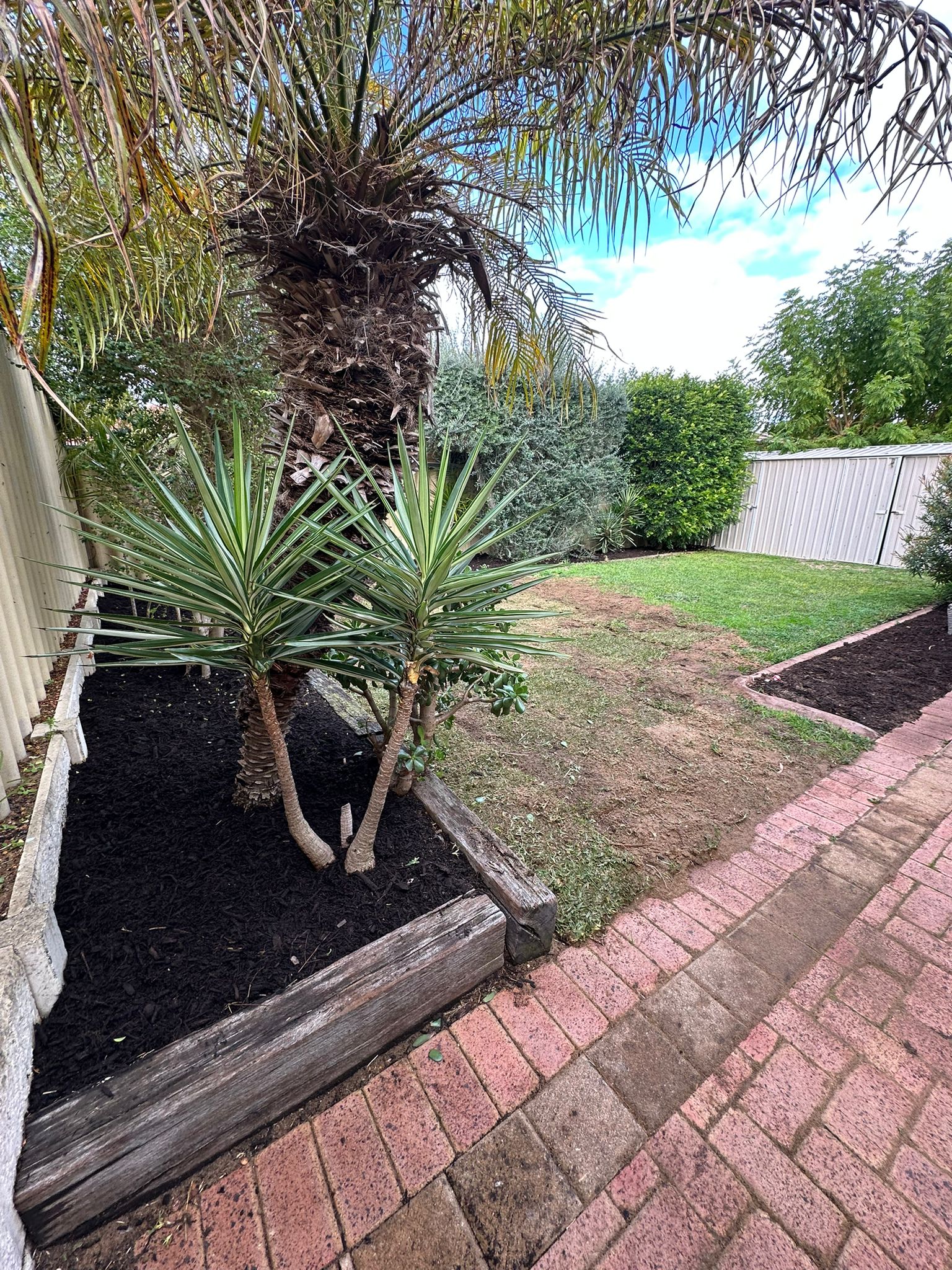
Water Corporation recommends 5 to 10cm of mulch over garden beds, and that range is right for most Perth gardens.
Too thin and it doesn't work. A light sprinkle under 5cm lets light through, so weeds push up, and it doesn't slow evaporation much either. Thin mulch is mostly decoration.
Too thick causes problems too. Pile it on well past 10cm and water can struggle to get through to the soil, especially with finer mulches that mat together.
Top it up as it breaks down. Organic mulch thins out over time, so a bed that started at the right depth may need topping up after a season or two.
Which mulch to use
Not all mulch behaves the same, and on sandy soil the difference matters.
Coarse, chunky mulch is the pick for most Perth garden beds. Water Corporation recommends chunky, coarse mulch over soft, fine ones for saving water. Bigger pieces leave gaps for water and air to get through, and they break down more slowly, so they last longer. Coarse bark and woodchip suit shrubs, borders, native gardens and low maintenance beds.
Fine mulch like straw, lucerne and pea straw breaks down quickly and feeds the soil as it goes. That makes it good for veggie patches and feature beds where you want to build the soil fast. The trade off is that it needs topping up more often, and fine layers can form a mat that sheds water.
When you're buying, look for products carrying the Waterwise and Smart Approved WaterMark labels. Water Corporation points people to those as a sign the mulch has been assessed for water saving.
When to mulch
The best time to mulch in Perth is spring, before summer arrives. That way the layer is already in place when the heat and the long dry stretches start, which is when it does its most important work.
Two things to do before the mulch goes down:
- Weed the bed first. Mulch smothers seeds, but established weeds can push straight through. Clear them out by hand before you cover the soil.
- Water the soil first. Mulch keeps moisture in, but it also keeps rain out if the soil underneath is already dry. Lay it over damp soil. If the sand is water repellent and won't wet up, deal with that first. Our post on hydrophobic sandy soil covers how.
Mistakes that undo the good work
Piling mulch against stems and trunks. Mulch pushed right up against a plant's stem keeps it constantly wet, and that's how collar rot starts. Leave a small gap of a few centimetres around every stem and trunk.
Letting it spill onto the lawn. Mulch that creeps over the edge of a bed smothers the grass along the border and looks messy. A firm edge keeps both sides in their place. That's where lawn edging earns its keep, especially steel or Corten edging that holds its line for years.
Laying it once and forgetting it. Organic mulch breaks down. That's part of the point, but it means a bed laid at the right depth two years ago probably isn't at the right depth now.
Using fine mulch everywhere. Pea straw is great in the veggie patch, but across a whole garden it breaks down fast and can mat into a layer that sheds water. Match the mulch to the bed.
Mulch in the rest of the yard
Mulch isn't the only option for bare ground. In narrow side yards and shaded corners where nothing much grows, decorative pebble or gravel can be a better long term answer. We've compared them in mulch vs pebbles vs gravel.
And if you've got a lawn patch under trees that keeps failing, turning it into a mulched garden bed is often the smartest fix. We've written about that in why your lawn is thinning under the trees.
The short version
Lay 5 to 10cm. Use coarse, chunky mulch for most beds and save the fine stuff for the veggie patch. Weed and water before it goes down, keep it off the stems, edge the beds so it stays put, and top it up as it breaks down. Spring is the time to do it.
Our garden mulching service handles the whole job, from clearing the beds to laying the right mulch at the right depth, and plenty of clients fold it into a complete lawn care package so the lawn and the beds are looked after together. Tell us about your garden through the quote form and we'll reply within one business day.
Want your lawn handled properly?
Get a free, no-obligation quote and we’ll get back to you, usually within one business day.